Remembering 9/11: millennial memories and the years that followed
By Teddy Danielson · Edited edition:
Edited by The Nostalgic Millennial
Original publication and manuscript receipt dates are not established.
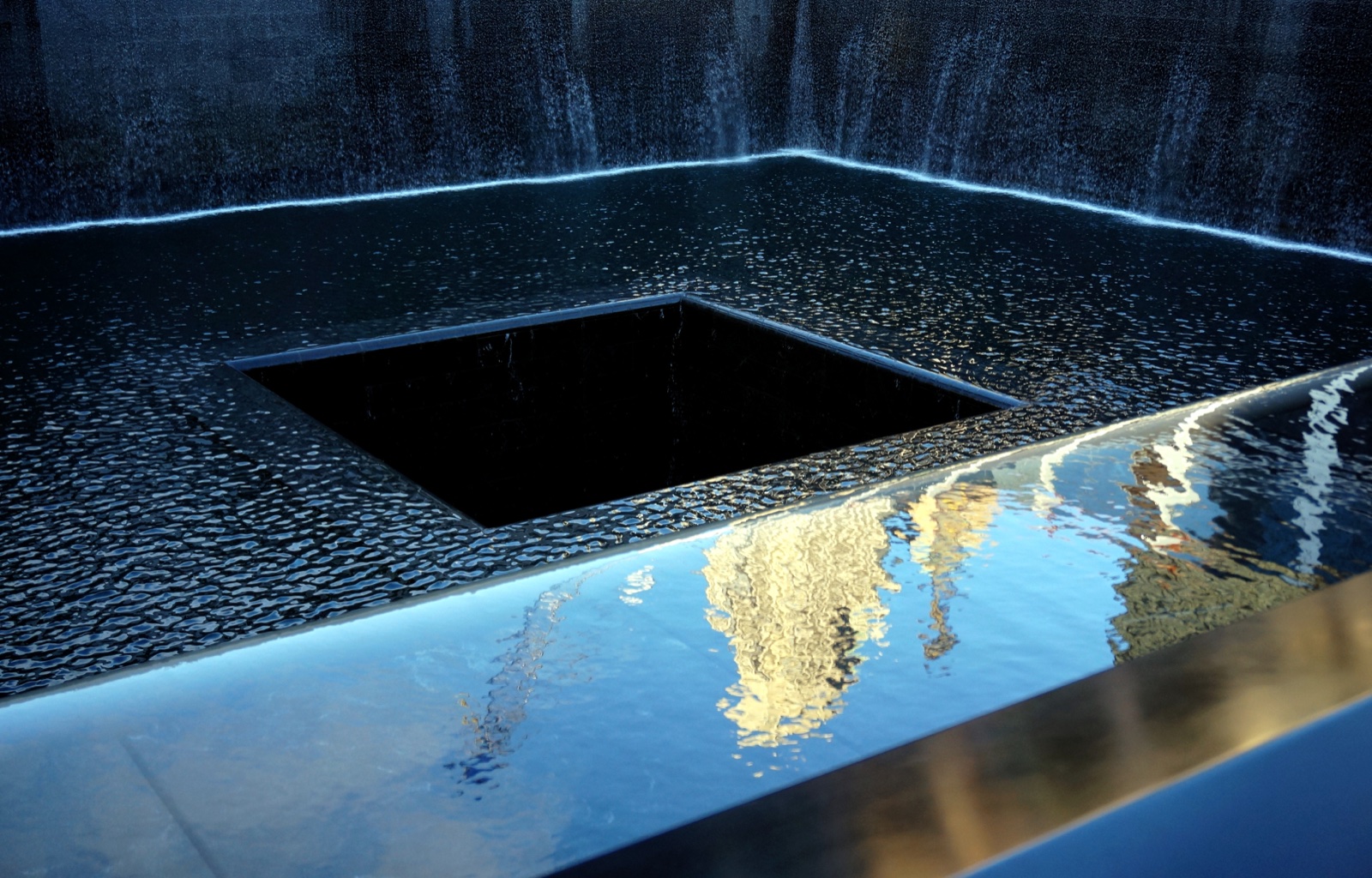
For someone who remembers September 11, 2001, the day may begin with a particular classroom, television screen or conversation with an adult who was struggling to explain the news. Other millennials were too young to remember it clearly. A generation can share a period of history without sharing one memory of it.
The attacks killed 2,977 people in New York, at the Pentagon and aboard Flight 93 in Pennsylvania, according to the National September 11 Memorial & Museum. Two hijacked planes struck the World Trade Center and one struck the Pentagon. Flight 93 crashed after passengers and crew fought the hijackers. People lost relatives, friends and colleagues; survivors and responders carried experiences that a distant television audience could not fully know.
Looking back means keeping those people in view while asking what changed in the years afterward. Questions about safety, public service, national identity and the news have personal answers as well as a political history.
A before and after, experienced at different ages
Pew Research Center uses 1981 through 1996 as its working millennial birth range. People in that range turned 5 through 20 during 2001. A preschooler and a college student had very different ways of understanding what happened. Pew also cautions that generational boundaries are analytical tools and that differences within a generation can be substantial.
The end of the Cold War and the spread of the internet were part of the background to some childhoods. That does not make the years before the attacks a uniformly peaceful or optimistic time. Family circumstances and where someone lived affected what safety meant long before that morning.
For those who remember an ordinary day interrupted, “before and after” can still describe a real experience. It helps to distinguish the memory of the day from what someone later learned about the attacks, the wars and government policy.
Security became part of everyday conversation
Airport screening, terrorism alerts and the phrase “homeland security” became familiar subjects in the aftermath. The changes happened over time. The Transportation Security Administration's historical exhibit dates the law creating TSA to November 19, 2001. The Homeland Security Act of 2002 created the Department of Homeland Security.
The color-coded Homeland Security Advisory System began in March 2002. It was replaced by the National Terrorism Advisory System in April 2011, as described in DHS's later account. A remembered orange alert belongs to that period, rather than to every year since the attacks.
News about Afghanistan and Iraq also became part of growing up during those years. Someone with a relative serving overseas encountered it differently from someone following distant coverage. Describing the period accurately leaves room for those differences instead of assigning every young person the same fear or political lesson.
Patriotism, public service and skepticism
School assemblies, tributes to first responders and community support belong to some people's recollections. Others recall arguments about the wars, intelligence failures or government surveillance. A person could value public service and disagree with a policy at the same time.
The USA PATRIOT Act became law on October 26, 2001. Its supporters defended expanded investigative tools as necessary for security. Civil-liberties organizations challenged the reach and oversight of those powers. The ACLU's account of surveillance under the law records one participant's criticism of that expansion.
Those debates provide a concrete history behind questions about trust and accountability. They do not establish that an entire generation moved together from patriotism to skepticism. People disagreed then, and people who lived through the same years can still draw different conclusions.
Identity and belonging
National grief did not mean that everyone felt equally protected. The Justice Department documented post-9/11 backlash, including assaults, threats and discrimination directed at Arab, Muslim, Sikh and South Asian Americans, as well as people perceived to belong to those groups. Those identities are distinct; prejudice often ignored the distinctions.
A discussion of American identity needs room for both community support and exclusion. Someone might remember neighbors helping each other, while another remembers being treated as a threat because of a name, religion or appearance. Listening to an individual account does not require treating it as the experience of an entire community.
The history also includes efforts to challenge discrimination. Remembering those efforts is more useful than assuming that growing up after the attacks made everyone either more inclusive or more suspicious.
Work, purpose and the years that followed
A decision to join the military, enter public service or pursue humanitarian work can be part of a person's account of the aftermath. Someone else may connect those years with uncertainty about money or a change in what they wanted from work.
Ask about those choices alongside other wars, economic downturns and family circumstances that shaped people's options. The original decision to enter a field and the way someone explains it years later can be different parts of the story.
The same care applies to work-life balance, community and mental health. It is possible to discuss what someone values without claiming that 9/11 caused a whole cohort's present preferences or anxiety. A useful personal question is: what do you connect with that period, and what else influenced the path you took?
Watching the news
Television brought the attacks into homes and classrooms far from the sites. Later internet reports, documentaries and social media added accounts that people did not necessarily encounter that morning.
Round-the-clock cable news already existed. CNN began its 24-hour service on June 1, 1980. September 11 was a major event covered through that format, rather than the beginning of continuous news itself.
When revisiting coverage, separate eyewitness reporting from commentary and later reconstruction. Check who made a film or article, when it appeared and which sources it uses. Repeated footage can become part of a memory even when the viewer was nowhere near the event.
You can choose how much distressing material to watch. Reading an account, using several sources or stopping a documentary are reasonable choices. People develop different news habits; a person's age alone does not tell you how they judge sources or respond to distressing coverage.
Record a memory without turning it into a public obligation
For someone with no direct memory, a personal account can make the history less abstract. It also records the limits of what the speaker knew at the time. A child's account may be accurate about a classroom conversation while saying little about events elsewhere.
If you want to keep an account privately, try these prompts:
- Where were you, and what do you remember seeing or hearing yourself?
- What did someone explain, and what did you understand then?
- Which details came from later reporting or conversations?
- What changed in your daily life, and what remained the same?
You can write an account or make an audio or video recording. A photograph of a personal memento or newspaper can accompany it, with its date and source recorded. Ask permission before sharing another person's story or identifiable photograph, and distinguish a saved clipping from a photograph you took yourself.
Share with family if you want to. No one owes a public account of a painful experience, and this page does not collect submissions.
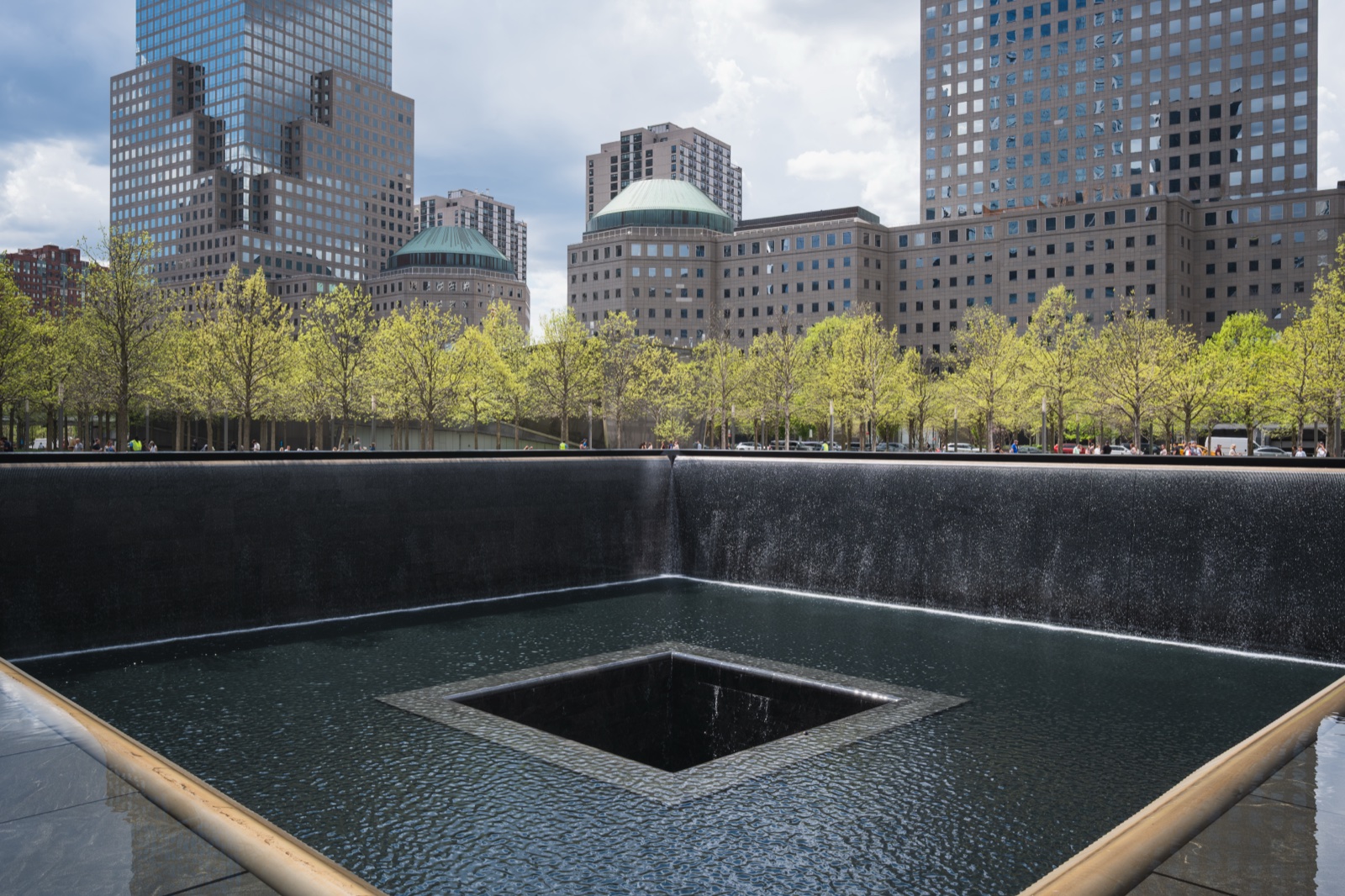
Books for further reading
The following books approach different parts of the history. Compare their sources and scope rather than expecting one account to answer every question.
As an Amazon Associate, I earn from qualifying purchases.
The Looming Tower
Lawrence Wright's The Looming Tower: Al-Qaeda and the Road to 9/11 examines the history leading to the attacks. It won the 2007 Pulitzer Prize for General Nonfiction. The linked Vintage paperback is ISBN 9781400030842.
View The Looming Tower Vintage paperback on Amazon (paid link)
102 Minutes
Jim Dwyer and Kevin Flynn's 102 Minutes: The Untold Story of the Fight to Survive Inside the Twin Towers reconstructs experiences inside the World Trade Center. Its focus is the people in the buildings and the effort to survive. The linked 2011 Times Books paperback uses the subtitle The Unforgettable Story of the Fight to Survive Inside the Twin Towers and ISBN 9780805094213. The publisher credits both authors; the retailer currently lists Dwyer alone.
View 102 Minutes Times Books paperback, ISBN 9780805094213, on Amazon (paid link)
Fall and Rise
Mitchell Zuckoff's Fall and Rise: The Story of 9/11 follows individual experiences within an account of the day. Its author's work page provides background on the book.
The 9/11 Commission Report
The National Commission on Terrorist Attacks Upon the United States produced The 9/11 Commission Report. The official report is available through GovInfo, without a book purchase. Its account and recommendations can be compared with later reporting and other historical work.
Terror and Liberalism
Paul Berman's Terror and Liberalism offers a political interpretation of terrorism and the response to it. Read it as an argument, alongside accounts with different purposes and perspectives. The linked Norton paperback is ISBN 9780393325553.
View Terror and Liberalism Norton paperback on Amazon (paid link)
Documentary identities to check
9/11, associated with Jules and Gédéon Naudet's footage and firefighter James Hanlon, aired on CBS in 2002. The network's announcement describes its development from the filmmakers' work with New York firefighters. It contains footage of the day itself.
American Manhunt: Osama bin Laden is a 2025 Netflix series directed by Mor Loushy and Daniel Sivan. A different documentary, Manhunt, directed by Greg Barker, premiered in 2013.
Fahrenheit 9/11, Michael Moore's 2004 film, presents Moore's critical view of the Bush administration and the aftermath. Treat its interpretation as the filmmaker's perspective when comparing it with other sources.
Turning Point: 9/11 and the War on Terror is Brian Knappenberger's five-part 2021 series. It examines the attacks and the ensuing war on terror.
Check current regional availability and program details before obtaining a copy. Choose material you are comfortable watching.
Keep individual experiences in the history
There is no single millennial memory of September 11. A person who lost someone, a responder, a military family and a child watching television can describe very different experiences of the same period.
Preserve those differences when passing on the history. Record what someone remembers, identify what later sources establish and keep the people who were killed, those who survived and those who responded at the center of the account.